The
Jerusalem
Biennale
House Dog
Elhai Salomon
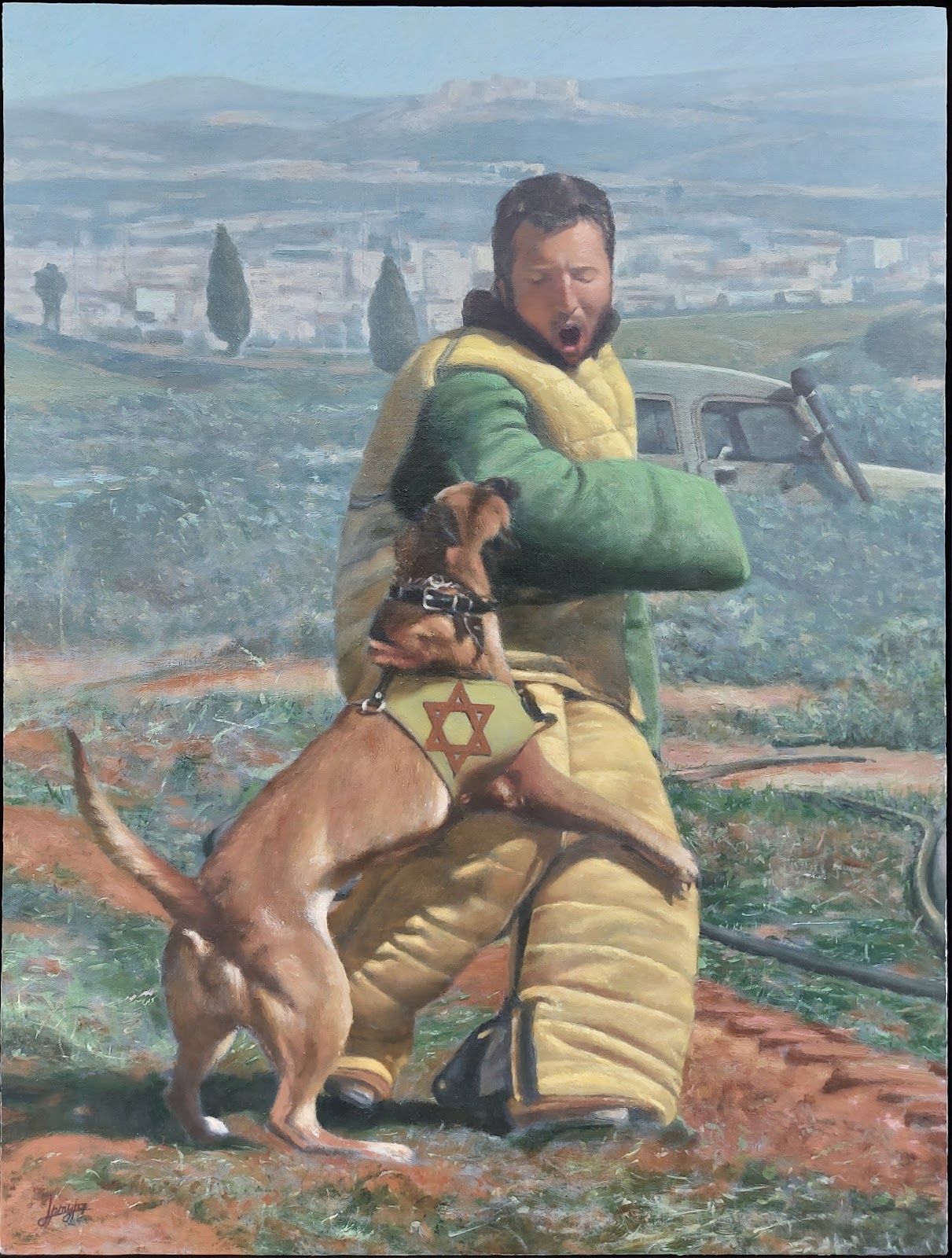
"A masque of barking in pointed letters; thus, I fulfilled the role of a house dog in the homeland." (Uri Zvi Greenberg, House Dog) The dog has accompanied humankind since the dawn of culture. Once a wolf, it crossed the boundary between the animal and the human world, becoming a guardian of thresholds—a liminal figure between nature and culture, wildness and domestication, violence and loyalty. The dog is not merely an animal alongside the human; it functions as a mirror, reflecting the human image, including what is often repressed. Throughout the history of Western art, the dog has shifted from a despised, marginalized, and threatening figure to a familiar presence within the home. Within Jewish tradition, the dog bears a particularly heavy symbolic load. It appears as a figure of impurity, brazenness, and social breakdown. Rabbinic texts warn that before redemption "the face of the generation will be like the face of a dog," while Kabbalistic writings describe kalbin de-chatzifin—insolent dogs—as signs of rupture. In contemporary Israeli art, the dog emerges as an unsettling and charged image. A key reference is Menashe Kadishman's dog sculpture from the 1970s, rooted in images from the aftermath of the Yom Kippur War. The exhibition title, House Dog, is taken from Uri Zvi Greenberg's 1929 book, in which he casts himself as a house dog—loyal yet marginal, obedient yet barking in a moral warning against blindness and complacency.
Artists
Linda Lieff Altabef; Yael Boverman-Attas; Nomi Bruckmann; Sapir Gez; Shirley Siegal; Arthur Yakubov